Few things are more annoying than waiting for an oven that never seems to get hot. If yours is slower than it used to be, the good news is that the cause is usually one of a short list of faults, and a couple of simple checks will often point to which one.
First, is it really slow?
Many ovens take around 10 to 15 minutes to reach 180°C, and larger, older or non-fan ovens can take longer. The preheat light or beep can also go off before the whole oven is properly up to temperature. The real warning signs are an oven that has become noticeably slower than it used to be, food that comes out undercooked or unevenly cooked, or an oven that never seems to reach the temperature you set.
The simplest test is an inexpensive oven thermometer. Hang it from the middle shelf, set the oven to 180°C and see what it reads after 20 minutes. If the reading is well below the dial or display, the oven really is under-heating.
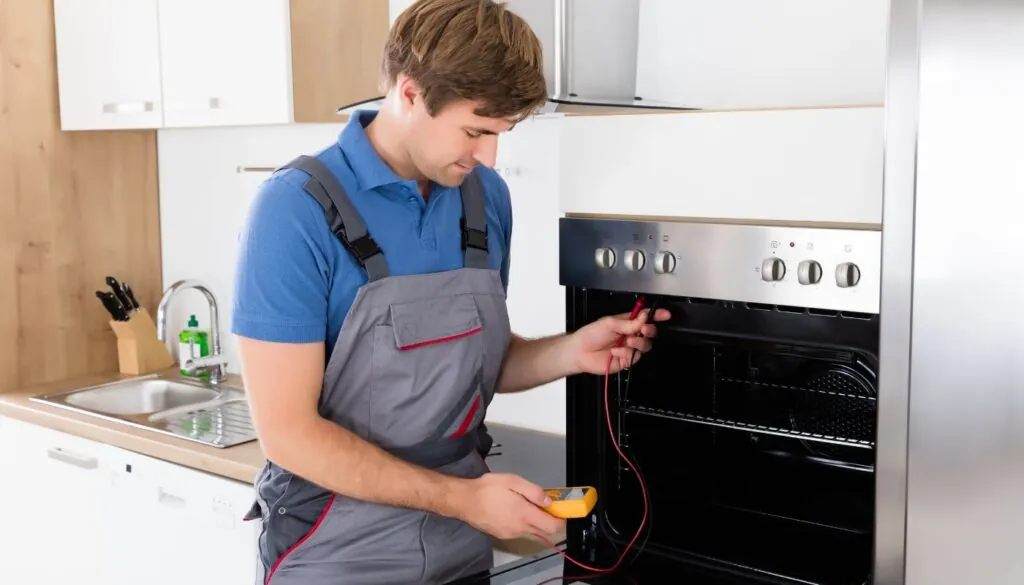
Electric ovens: the usual causes
- A worn heating element. Elements weaken and eventually fail, so the oven heats slowly or unevenly before it stops heating altogether. With the oven on, an element that isn't glowing orange, or one with a visible blister or break, is a strong sign. Look through the glass and don't touch it.
- A faulty thermostat or temperature sensor. If the oven thinks it is hotter than it is, or switches the heat off too early, it will under-cook. The thermometer test above will show it.
- A failing fan (fan ovens). If the fan is slow, noisy or not turning, heat doesn't circulate and the oven feels sluggish.
- A worn door seal. If the rubber seal is cracked or compressed, heat leaks out. A quick check: shut the door on a strip of paper. If it slides out easily all the way round, the seal isn't gripping.
- A faulty control or timer. Sometimes the oven is fine and the part telling it what to do isn't.
Gas ovens: the usual causes
- Blocked burner ports or a dirty ignition. Debris stops the flame spreading evenly or lighting properly.
- A faulty thermostat. The oven switches the flame down too early.
- A weak or failing ignitor or flame failure device. The oven may be slow to light or won't stay lit.
- A worn door seal, as above.
For anything involving the gas supply, the burner or the ignition, call a Gas Safe registered engineer. A flame that is yellow or limp rather than blue is a warning sign: stop using the oven and have it checked.
Don't use switches, lighters or flames. Open doors and windows, turn the gas off at the meter (unless it is in a cellar) and call the National Gas Emergency Service on 0800 111 999, free, 24 hours, from outside the property.
Safe checks you can do yourself
- Take out anything that blocks heat. Foil lining the base or covering the shelves, large trays that fill the shelf or baking sheets pushed against the back can all slow things down and affect airflow.
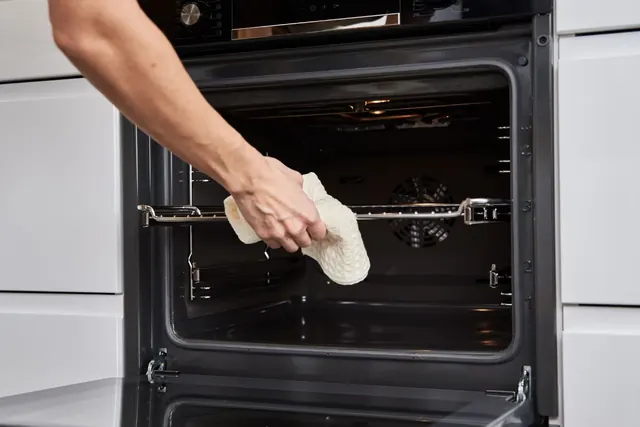
- Check the door seal for splits and gaps, and wipe off grease with a damp cloth when the oven is cold.
- Run the thermometer test described above.
- Check the fuse box. If the oven is only partly working or keeps cutting out, see whether the circuit has tripped. If it keeps tripping, leave it off.
- Look at the manual. Some ovens have a calibration setting. Check your model before you change anything.
Elements and thermostats are connected to the mains, and gas ovens have gas components. Don't remove back panels or rewire anything yourself. A qualified engineer can find the fault safely and fit the right part.
When to call an engineer
Book a repair if the thermometer shows the oven isn't reaching temperature, the element isn't glowing, the fan isn't turning, the door seal is damaged, or the oven keeps tripping the electrics. These are all routine repairs for our engineers, who cover Caerphilly and the surrounding valleys. Repairs start from £70 + VAT and come with a 90-day guarantee. See our oven repair page for more, or the cooker repair page if you have a freestanding or range cooker.
If your oven is very old and the repair bill looks high, our guide to repairing or replacing an appliance explains how to weigh it up.
Call us on 029 2088 5355 for a quote, or book online. Same-day or next-day where possible, repairs from £70 + VAT, and a 90-day guarantee on every repair.
Book a repair onlineFrequently asked questions
How long should an oven take to preheat?
Many ovens reach 180°C in roughly 10 to 15 minutes, though large, older or fan-assisted ovens can differ. What matters is whether yours has become slower than it used to be, or whether food is coming out undercooked.
Why is my electric oven slow to heat up?
The usual causes are a worn or failing heating element, a door seal that lets heat escape, a thermostat or temperature sensor that is reading wrongly, or a failing fan in a fan oven. An oven thermometer will show whether the oven is really reaching the temperature you set.
Can I replace an oven element myself?
Elements are connected to the mains and the work involves isolating the cooker and handling live wiring, so we recommend it is done by a qualified engineer. Ovens also differ, and the wrong part is a common mistake.
Is it worth repairing an old oven?
Often, yes. Elements, thermostats, fans and door seals are routine repairs. Ask for a quote first and compare it with the cost of a new oven. Our repair or replace guide explains how to weigh it up.